Blog
What Is Poultry AI? A Comprehensive Guide to Artificial Intelligence in Poultry Farming

What Is Poultry AI? A Comprehensive Guide to Artificial Intelligence in Poultry Farming
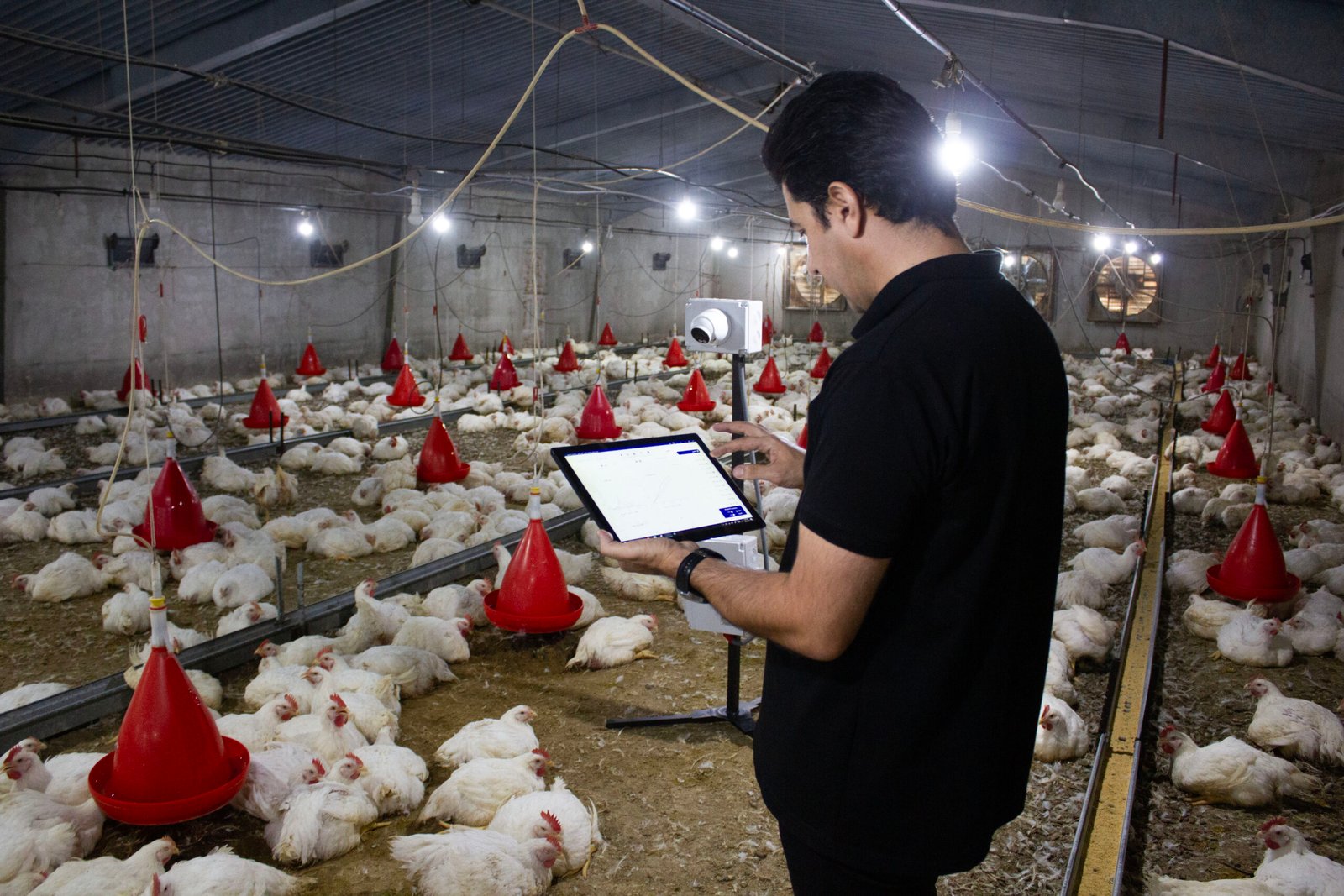
Poultry farming is experiencing its biggest transformation in decades. What once depended on manual observation and years of hands-on experience is now being reshaped by Artificial Intelligence.
From early disease detection to feed optimization and mortality reduction, Poultry AI is fundamentally changing how poultry production systems operate. Producers adopting AI-driven systems report improvements in efficiency, reduced losses, and more stable production outcomes.
This shift is not incremental—it represents a structural transition from experience-based management to data-driven, predictive decision systems.
This article provides a structured and comprehensive explanation of what Poultry AI is, how it works, and why it is becoming a critical layer of modern poultry production systems.
What Is Poultry AI?
Poultry AI refers to the application of artificial intelligence technologies in poultry farming to analyze data collected from farm environments and convert it into actionable intelligence for decision-making in health, welfare, production, and environmental management.
At its core, Poultry AI is not a monitoring system. It is a decision intelligence layer built on top of farm data.
It integrates multiple AI disciplines, including:
- Computer Vision
- Machine Learning
- Predictive Analytics
- Multimodal AI
These systems move beyond observation and enable:
- Pattern recognition
- Risk prediction
- Decision support
In advanced systems, Poultry AI evolves into a broader paradigm:
Poultry Intelligence: a unified decision intelligence system for poultry production.
Why Poultry Farming Is Becoming Data-Driven
Modern poultry production is increasingly shaped by systemic complexity.
Key drivers include:
- Increasing scale and density of production systems
- Global labor shortages in agriculture
- Rising animal welfare expectations
- Climate variability and environmental stress
- Need for feed efficiency optimization
- High-impact disease risks at scale
Traditional decision-making methods are no longer sufficient to manage this complexity.
As a result, poultry farming is transitioning into a data-centric biological production system, where AI plays a central role in interpretation and decision support.
Core Technologies Behind Poultry AI
Computer Vision
Computer Vision enables automated interpretation of visual data from poultry houses.
It is used for:
- Behavior analysis
- Activity tracking
- Mortality detection
- Anomaly identification
This transforms visual information into structured behavioral signals.
Machine Learning
Machine Learning models identify patterns across historical and real-time farm data.
Applications include:
- Growth modeling
- Production forecasting
- Risk classification
- Performance optimization
Predictive Analytics
Predictive systems forecast future states based on historical trends.
Key outputs include:
- Disease risk prediction
- Mortality forecasting
- Feed efficiency trends
- Environmental stress detection
Multimodal AI
Multimodal AI integrates heterogeneous data sources into a unified analytical framework:
- Video and image streams
- Environmental sensors (temperature, humidity, ammonia, CO₂)
- Production records
- Behavioral signals
This enables contextual intelligence rather than isolated analysis.
Multimodal Poultry AI represents the shift from single-signal monitoring to integrated biological understanding.
AI Agents
AI agents function as decision-support systems that translate analytical outputs into actionable recommendations for farm operators.
They act as an interface between complex AI systems and human decision-makers.
Robotics
Robotics extends AI into physical farm operations such as:
- Automated inspection
- Environmental interaction
- Operational assistance
Robotics represents the embodiment layer of poultry intelligence systems.
Applications of Poultry AI
Behavior Monitoring
AI systems continuously analyze flock movement and detect deviations in normal behavior patterns.
Environmental Intelligence
Environmental parameters are continuously monitored and analyzed to maintain optimal production conditions.
Key variables include:
- Temperature
- Humidity
- Ammonia
- CO₂ levels
Early Disease Risk Detection
One of the most critical applications of Poultry AI is identifying early-stage disease risks before clinical symptoms appear.
Mortality Detection and Management
AI systems can detect mortality events rapidly, reducing response time and secondary risk exposure.
Welfare Assessment
Animal welfare indicators are assessed through behavioral and environmental signals, providing continuous welfare evaluation.
Feed Efficiency Optimization
AI improves feed conversion efficiency by analyzing the relationship between environment, behavior, and growth.
Production Intelligence
AI supports optimization of broiler and layer production systems through predictive performance modeling.
Benefits of Poultry AI
The implementation of AI in poultry production systems leads to measurable improvements:
- Reduction in mortality rates
- Improved feed conversion efficiency (FCR)
- Early disease detection capabilities
- Reduced reliance on manual labor
- Improved animal welfare outcomes
- Enhanced production stability
- Increased operational efficiency
These benefits are most significant when AI systems operate continuously and in real-time.
Challenges of Poultry AI Adoption
Despite its advantages, adoption of Poultry AI is constrained by several factors:
- Data quality and consistency limitations
- Infrastructure requirements in farm environments
- Integration challenges with legacy systems
- Lack of interpretability in complex AI models
- Need for interdisciplinary expertise (agriculture + AI)
These challenges highlight the importance of system design and implementation strategy.
The Rise of Multimodal Poultry Intelligence
The next evolution of Poultry AI is the emergence of Multimodal Poultry Intelligence Systems.
These systems combine multiple data streams to generate contextual understanding of flock health and production dynamics.
Instead of analyzing isolated signals, they:
- Correlate environmental and behavioral patterns
- Identify hidden relationships between variables
- Generate predictive risk models
This represents a transition from monitoring systems to integrated decision intelligence platforms.
The Future of Poultry AI
Several emerging technologies are shaping the next phase of poultry intelligence:
Foundation Models in Agriculture
Large-scale models trained on agricultural and biological datasets.
Digital Twins
Virtual simulations of poultry production systems for predictive analysis.
AI Agents
Autonomous decision-support systems for farm management.
Autonomous Robotics
Physical systems capable of executing operational tasks.
Decision Intelligence Platforms
Integrated systems that convert raw data into optimized decisions.
Frequently Asked Questions (FAQ)
What is Poultry AI?
Poultry AI is the use of artificial intelligence to analyze poultry farm data and support decision-making in health, welfare, and production systems.
How is AI used in poultry farming?
AI is used for behavior analysis, disease prediction, environmental monitoring, and production optimization.
Can AI predict poultry diseases?
Yes. AI systems can detect early risk signals by analyzing behavioral and environmental changes before clinical symptoms appear.
What is precision poultry farming?
Precision poultry farming is a data-driven approach to optimizing poultry production using real-time analytics and AI systems.
What is multimodal AI in poultry farming?
Multimodal AI integrates multiple data sources such as vision, sensors, and production data into a unified intelligence system.
What is the future of AI in poultry production?
The future includes predictive intelligence systems, AI agents, digital twins, and autonomous farming ecosystems.